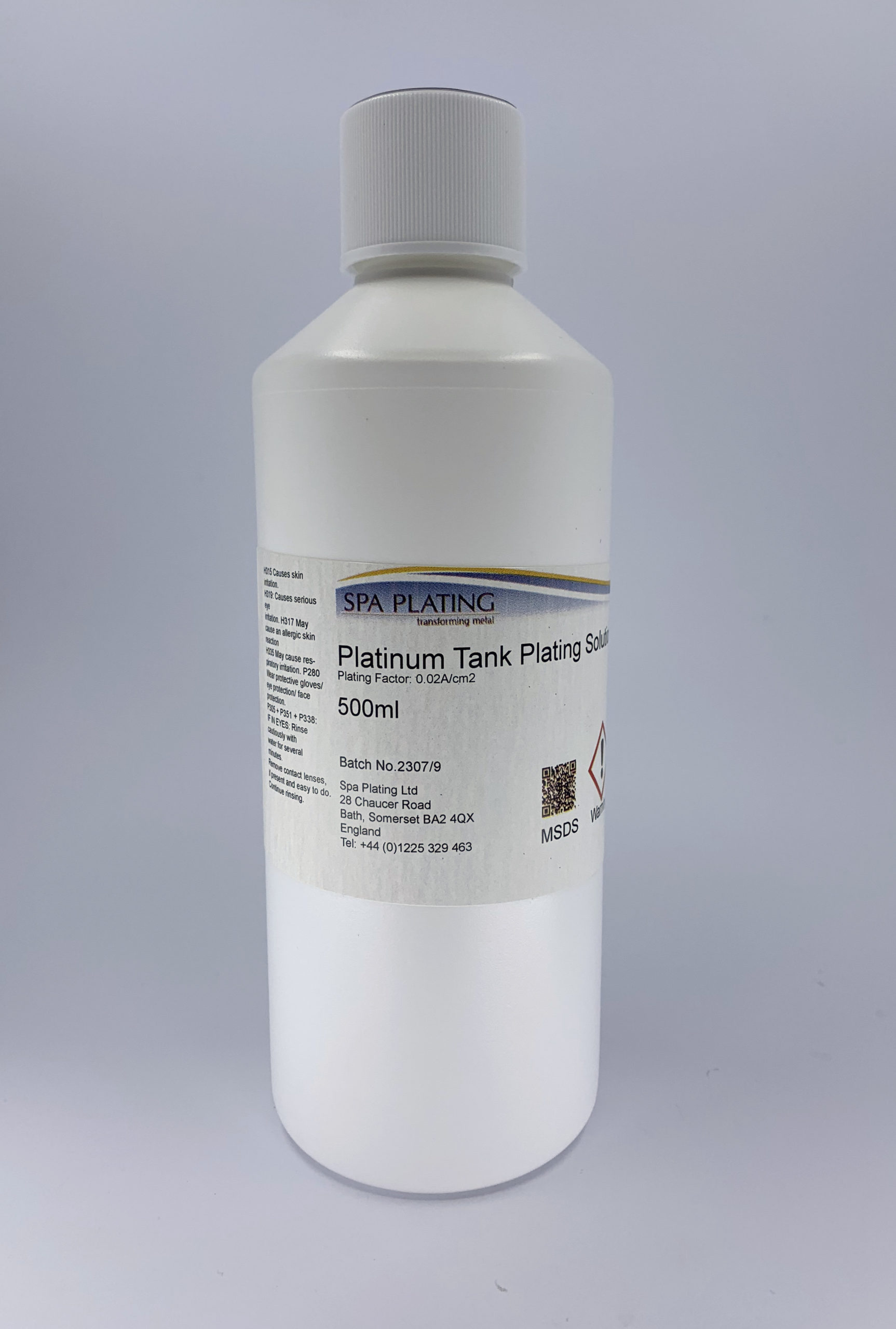
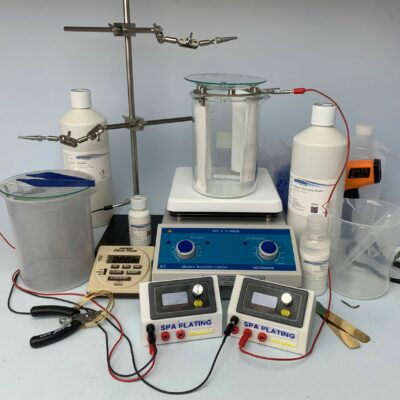
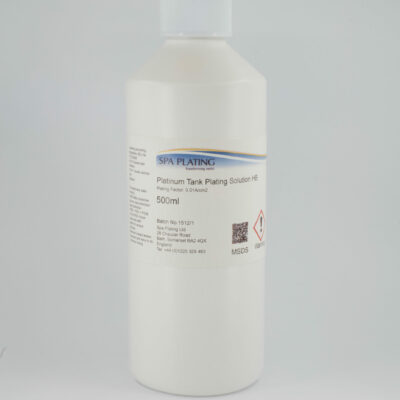
This platinum tank plating solution contains 5 grams of platinum per litre. It plates a hard wearing, bright layer – great for both decorative or functional applications of up to 2 microns.
This solution can be used for platinizing titanium.
Orders outside UK and EU
This plating solution cannot be purchased and shipped outside the UK and the EU because it’s part of our range of plating solutions that are regulated for transport.
We sell another platinum plating solution that is available for export. This solution requires a small volume of battery acid to be added before use. More can be read about this solution
by clicking Here:
HS Code: 3824 99 70
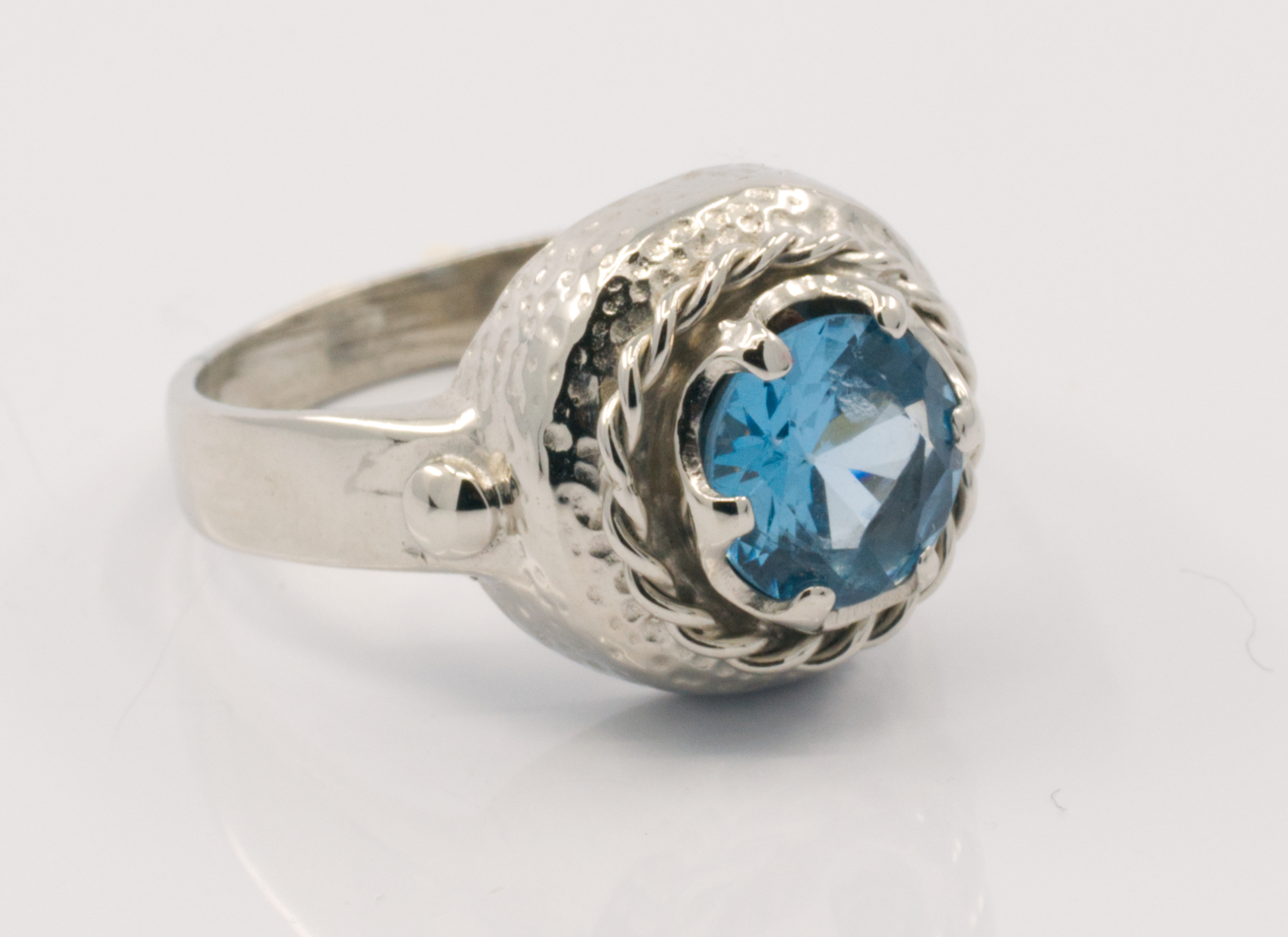
Our platinum tank plating solution plates a bright, hard wearing layer. This makes it very suitable for items such as rings and bracelets.
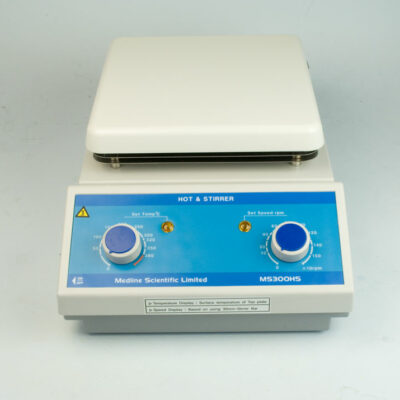
The first video shows platinum plating a silver ring using a coffee cup warmer rather than the Hotplate Stirrer to heat the platinum solution. It also features two of our our in-house designed and manufactured Microplater Classics as power sources.
Here’s a video showing how to platinum tank plate titianium electrodes
In this video you can see how to platinum tank plate on to brass.
This video demonstrates platinum tank plating to a specific weight/thickness using our platinum tank plating calculator;
Features Applications
Bright and very hard Used to plate gem stone settings as it enhances the brilliance of diamonds and other precious stones.
Hypoallergenic Makes it a very suitable finish for personal items such as jewellery
Doesn’t oxidise Used for functional applications such as plating over silver electrical connectors and plating surgical instruments
For guidance on how to use our tank plating kit, please click HERE to see a guide in our Electroplating Manual.
Plate over a freshly plated gold flash layer
Platinum concentration: 5 grams per litre
How to use this calculator :
1. In the first box, enter the thickness that you want to plate to in microns (thousandths of a millimetre).
2. In the second box, enter the surface area of the article in square centimetres (cm2).
3. Click the ‘Calculate’ button.
4. Read off the amp setting for your rectifier, the plating time and the volume of replenisher to add before starting the plating sequence.
5. The weight of platinum and the approximate cost of the job is included in the final two readouts.
Operating Conditions and Deposit Data
Plating Factor
0.01 A/cm2
Maximum deposit thickness
2 microns (see notes)
Plating rate
1 micron every 19 minutes at 0.01A/cm2
Temperature
38 – 42 °C
pH
<1
Platinum concentration
5 grams per litre
Turnovers to exhaustion
5 – 6 (see notes)
Agitation
None to minimum
Anodes
Platinum rod electrodes with bags preferred, or mesh electrode
Lightness (L*) of deposit
72
Platinum content in plate
99.9%
Cathode efficiency
~25% at Plating Factor = 0.01A/cm2
Hardness
450 – 500 Hv
Density of deposit
21.3 g/cm3
Stress
Medium – high
Special storage requirements
Away from sunlight
Shelf life
1 – 2 years
Health and Safety classification
Harmful
Special considerations
None
Transport (UN number)
UN number: 2796
Notes:
When plating on titanium, it is essential to sand/grit blast the surface prior to plating.
The deposit will turn grey if the concentration of platinum drops below 3 grams per litre.
It can however be polished back with ease and doesn’t affect the physical properties of the deposit.
We recommend adding 40ml per litre of solution to restore its bright plating characteristics.
Alternatively, use the Platinum Concentration Calculator to establish a more accurate addition.
A turnover is defined as one complete replenishment of platinum. In the case of Platinum.
Tank Plating Solution, as the concentration of platinum is 5 grams per litre, a turnover for 1 litre.
of solution is 5 grams and the bath would be exhausted at between 25 to 30 grams of platinum plated.
Plating over 2 microns may result in delamination of the platinum film.
Gassing at the workpiece in solutions maintained at the recommended concentration is a sign of
excessive current.
Some items are regulated for transport and can only be delivered to destinations in the UK and countries within the EU. Alternative or substitute products are detailed in the ‘Description’ tab of this tabbed panel or under Related Items below this tabbed panel.
For all price quotations for deliveries, please add your items to our shopping cart. You will be able to see the shipping costs by clicking on the ‘Calculate shipping’ button in the cart and before checking out.
Please click on the link below to download the SDS for this product:
We use cookies to ensure that we give you the best experience on our website. If you continue to use this site we will assume that you are happy with it.OkCookie policy