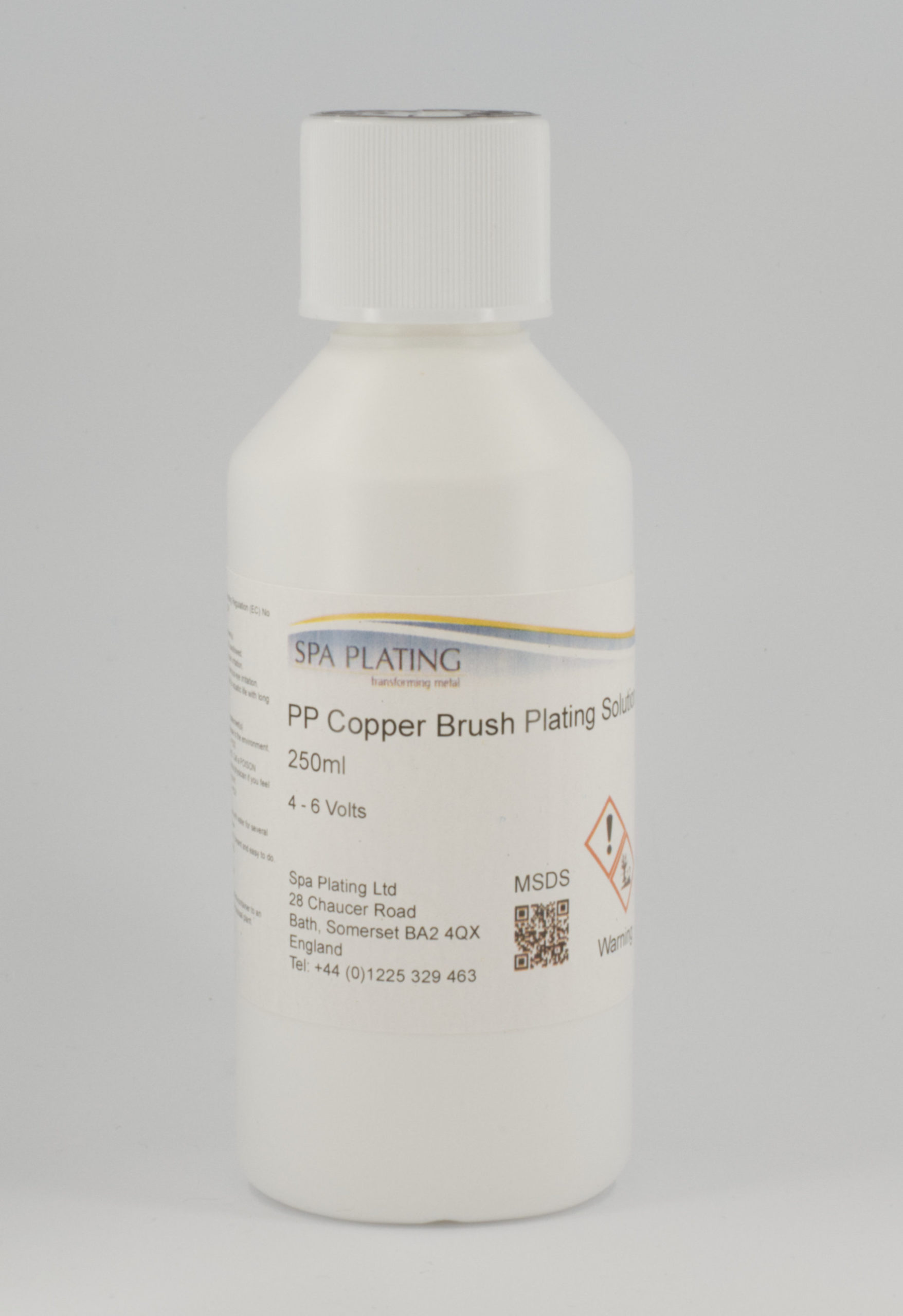
This copper plating solution is great for plating on non-conductive materials. It plates bright and levels out the plating surface. PP Copper also plates very well onto brass and pewter.
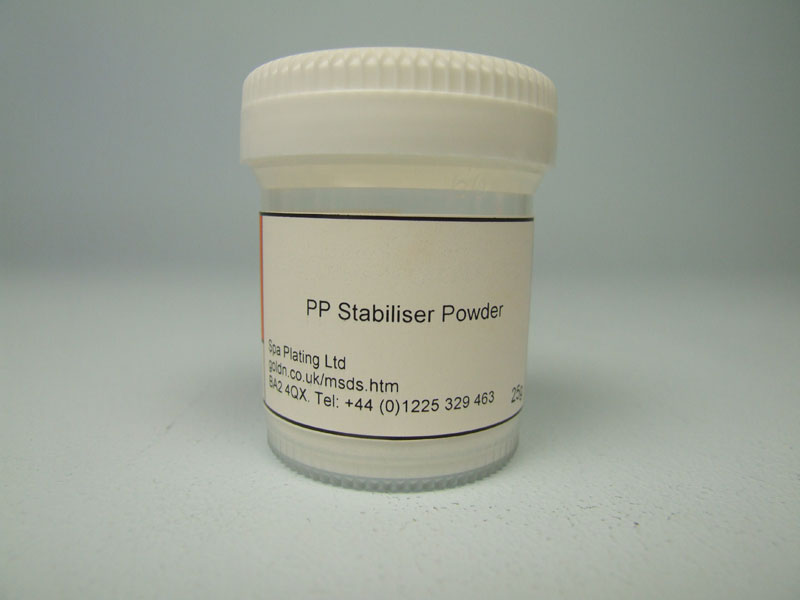
When plating very large areas or building up shiny surfaces onto matt surfaces, we advise mixing with PP Stabiliser Powder to supress tarnishing.
HS Code: 3824 99 70
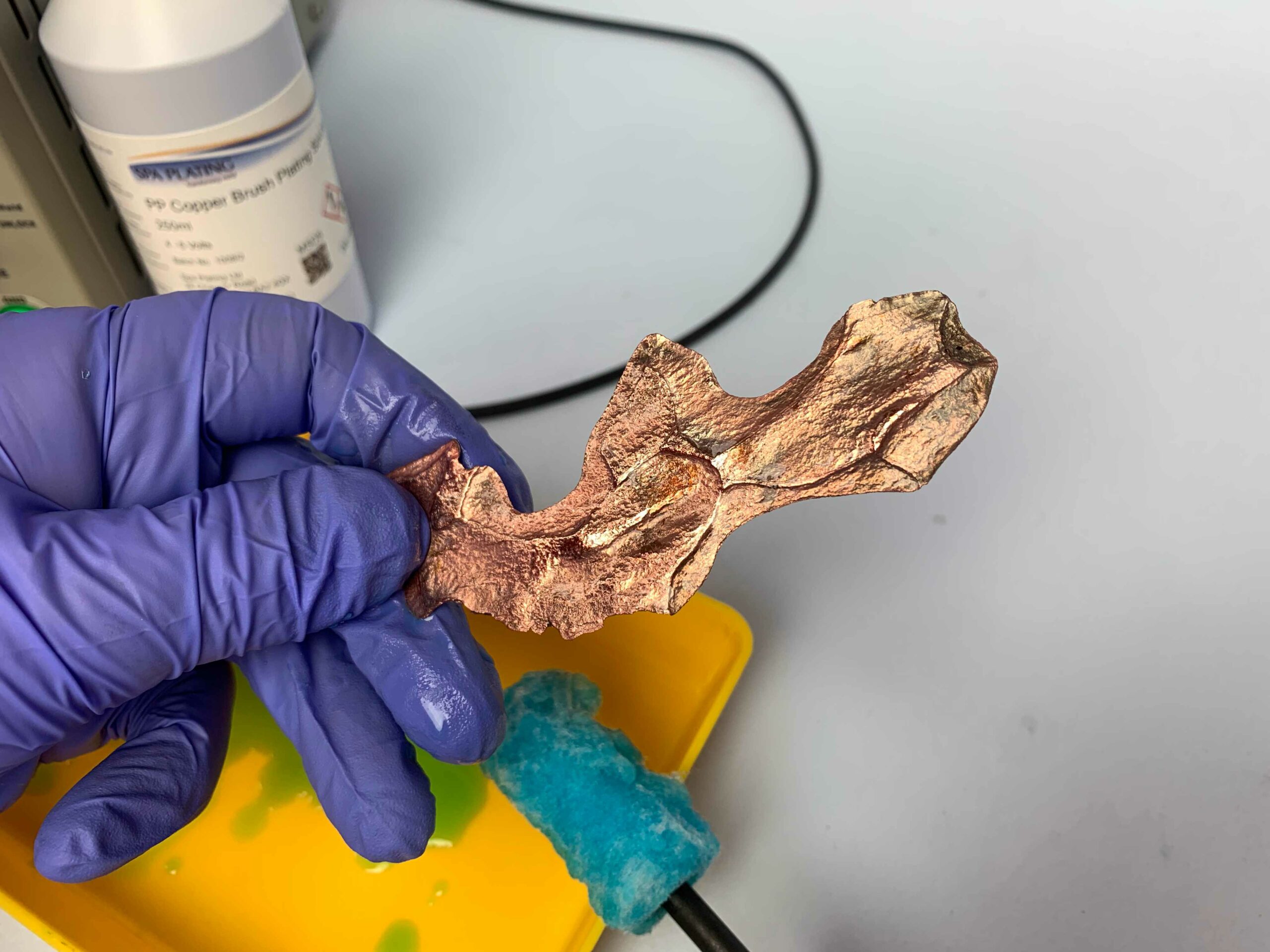
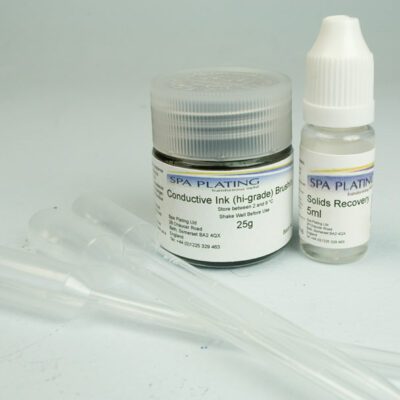
Here is a piece of tree bark that has been plated with our PP Copper Brush Plating Solution, after having been made conductive with our Conductive Ink (hi grade). To work out how much plating solution you will need to plate your item and how long it will take, please click on the ‘Calculator’ tab above and select PP Copper Plating Solution
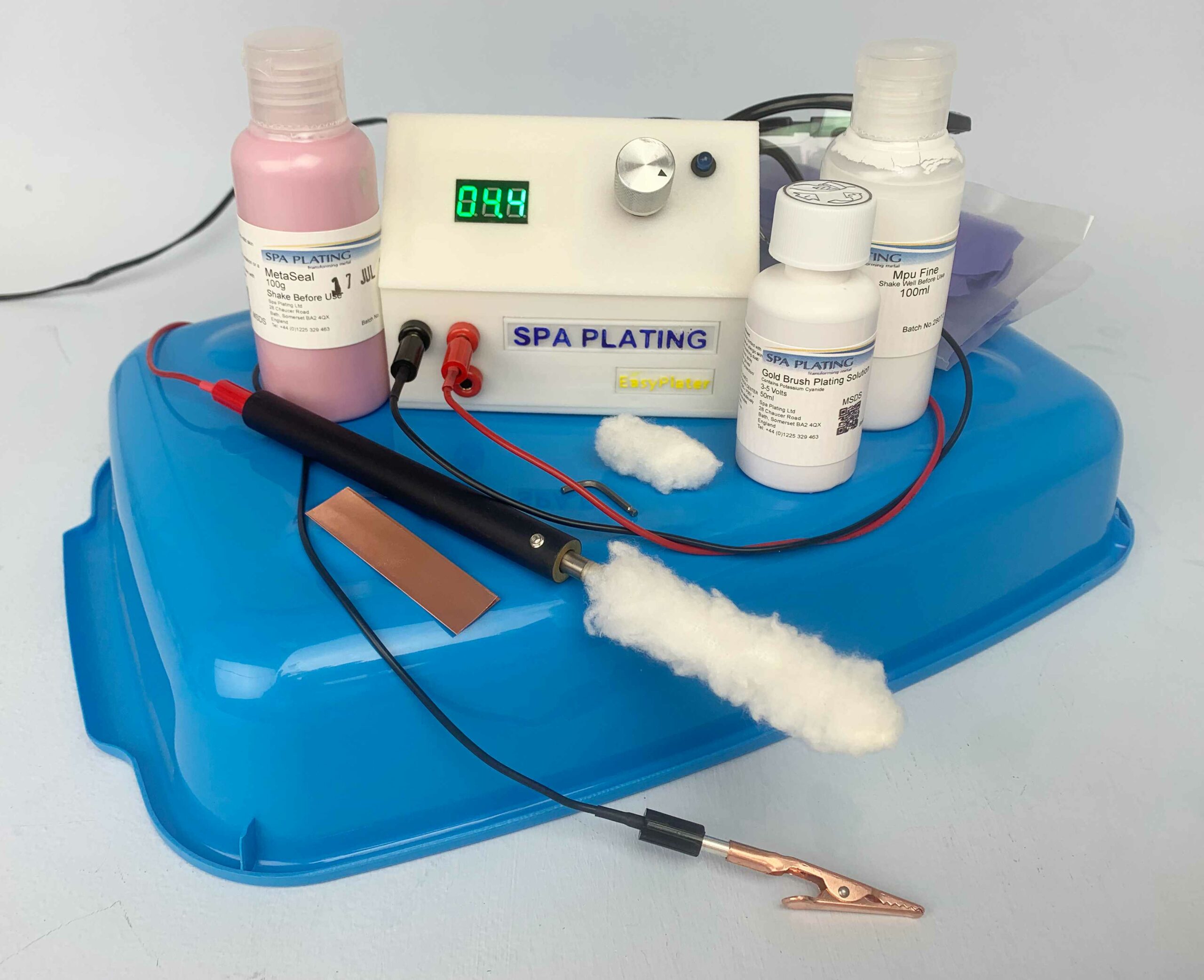
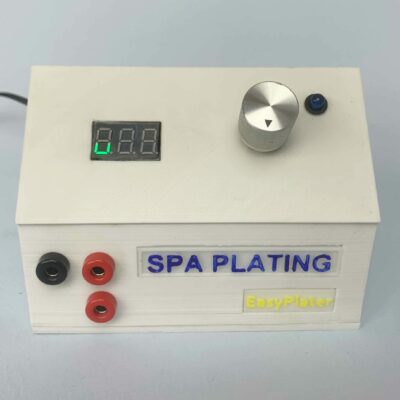
Our brush plating equipment is powered by our EasyPlater. It’s very straightforward to use, compact and lightweight.
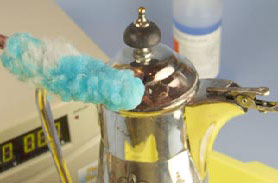
PP Copper being used to repair a dent in an antique coffee pot. We recommend our MPU Coarsefor polishing back your layer of PP Copper between plated layers.
Our PP Copper needs to be mixed with a solution made with our PP Stabiliser when plating very large areas or building up shiny surfaces onto matt surfaces. For purchase PP Stabiliser, please click HERE.
Here is a video showing how to use our PP Copper Brush Plating Solution to plate on wood;
Reduces the amount of polishing necessary to produce a high shine – saves you time and money when you want to go on to plate precious metals such as silver and gold
Levelling solution
If the item you’re plating is heavily scratched you can plate PP Copper extra thick and then polish back, saving you having to polish the item in the first place
Can be used to plate non-conductive surfaces such as wood.
Can be used to plate onto metals like brass and pewter.
Plates very well onto brass and pewter. It also serves as a good undercoat for nickel and gold when plating onto pewter.
Please note that PP Stabiliser Powder is not necessary when plating PP Copper Brush Plating Solution on metals such as brass and pewter.
Brush Calculator
Operating Conditions and Deposit Data
Voltage Range
4.0 – 6.0 volts
Temperature
14 – 25 °C
Gold Concentration
>60g/l
Electrode
Carbon
Gold content in plate
100% (balance carbon)
Plating Rate at (3.5 volts, Platinum electrode)
Approx. 2 microns per minute (spot)
Hardness
380 – 385 Hv
Density of deposit
8.8 g/cm3
Stress
Low stress
Notes:
We strongly advise against the use of stainless steel anodes for most of our plating processes especially in the case of PP Copper Brush Plating Solution
Plating rates are calculated over a sample area which is permanently covered by swab.
When plating onto brass or pewter, PP Stabiliser will not be required.
General guide;
Certain small items, for example Swabs, Nibs and Plating Pens can be sent by normal post within the UK
The courier option for UK deliveries is FedEx
Free UK mainland delivery available on orders over £200
International orders usually 3-5 working days.
For all price quotations for deliveries, please add your items to our shopping cart. You will be able to see the shipping costs by clicking on the ‘Calculate shipping’ button in the cart and before checking out.
Please click on the link below to download the SDS for this product:
We use cookies to ensure that we give you the best experience on our website. If you continue to use this site we will assume that you are happy with it.OkCookie policy